
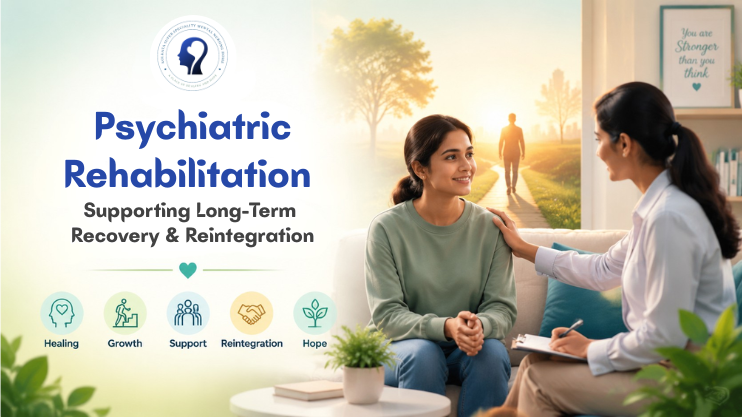
Mental health recovery is rarely a straight line. Many people feel better after medication changes or a few therapy sessions, then struggle again when work pressure returns, family conflict spikes, or sleep collapses. That pattern is common in psychiatric care, especially when the underlying issue is not only symptoms, but loss of routine, loss of confidence, and loss of functioning. Psychiatric rehabilitation exists to fix that gap.
Psychiatric rehabilitation is a structured set of rehabilitation services that helps people rebuild daily living, rebuild coping capacity, and rebuild independence after mental health problems have disrupted their life. It is especially relevant for serious mental illness, where symptom severity and functional impairment can continue even after a crisis has stabilized.
Why Psychiatric Rehabilitation Matters in the Bigger Picture
Mental health conditions are a major contributor to disability worldwide, and the Global burden of disease is not only about mortality. It is about years lived with psychosocial disability, reduced productivity, strained social relationship functioning, and repeated relapses. Psychiatric rehabilitation is designed for that reality. It focuses on the long game: stable functioning, safer routines, and a life that holds up under stress.
What Psychiatric Rehabilitation Actually Is
Psychiatric rehabilitation is not “extra counselling.” It is recovery-oriented practice that focuses on functional recovery and community integration. It helps a person translate treatment into daily living, including self-care, sleep stability, social interaction, work readiness, and relapse prevention.
It also supports the shift from being defined by illness to building a healthier illness identity. That is not a slogan. It is a practical change where a person stops living as “someone broken” and starts living as “someone managing a condition with skills and support.”
Who Psychiatric Rehabilitation Helps Most
Psychiatric rehabilitation is often most useful when someone has serious mental illness, repeated hospitalizations, chronic impairment, or persistent symptoms that limit work and relationships. It is commonly used in schizophrenia spectrum conditions, bipolar disorder, severe depression, trauma-related illness, and substance use disorders when functioning has been damaged over time.
It also helps when family members have become informal caregivers and are burning out. In those cases, rehabilitation supports the person and reduces strain on the household.
Recovery-Oriented Practice and Why It Works
A recovery-oriented practice approach does not treat the patient as a passive recipient of care. It treats the person as an active agent. This is where self-determination theory becomes relevant in real life. People improve faster and maintain gains longer when they experience autonomy, competence, and connection.
That is why autonomy support matters. A good support team does not control the person into compliance. It helps them rebuild choice, routine, and confidence while still protecting safety.
This is also why recovery-oriented practices often include goal-setting that is specific and measurable, not vague motivation.
The Treatment Plan: Moving from Crisis Care to Daily Stability
A psychiatric treatment plan can stabilize symptoms. Psychiatric rehabilitation makes that plan livable. Many relapses happen because the person leaves hospital care with instructions but no practical structure to follow.
Rehabilitation services strengthen the treatment plan by turning it into routines and skills. That includes medication adherence, sleep routines, stress coping, social scheduling, and early warning sign recognition. When those supports are in place, hospitalization rates often fall because setbacks are addressed earlier.
Medication Management Without Losing the Person
Medication management is often essential in serious mental illness, but it is not the entire solution. Antipsychotic medication can stabilize psychosis and severe agitation, but it can also create side effects that undermine recovery, including sedation and metabolic changes.
A strong rehabilitation program supports medication adherence while also addressing real barriers like side effects, stigma, forgetfulness, substance abuse, and low motivation. In many cases, motivational interviewing is used to reduce resistance and improve collaboration, especially when the person feels ambivalent about treatment.
Rehabilitation also pays attention to physical health. Physical exercise training and weight loss support may be clinically important for people on long-term antipsychotic medication, not for appearance, but for energy, metabolic safety, and long-term functioning.
Therapy Skills That Translate to Real Life
Psychiatric rehabilitation often integrates cognitive-behavioral therapy strategies, especially when anxiety, depression, or avoidance patterns are driving disability. Cognitive restructuring is one of the most practical CBT tools used to reduce catastrophic thinking, self-blame, and hopelessness. These changes improve psychosocial functioning because they affect behavior in daily life, not just mood.
Rehabilitation also includes relapse prevention skills that reduce symptom severity over time by helping people intervene earlier.
Life Skills and Housing Support: The Unsexy Stuff That Prevents Relapse
Long-term mental wellness is fragile without stability. That includes food, sleep, hygiene, budgeting, and safe housing. Housing support is not charity. It is relapse prevention. When housing is unstable, medication adherence drops, sleep disorders worsen, and crisis risk rises.
Life skills training helps people manage daily functioning so they rely less on family members and experience more independence.
Vocational Rehabilitation and the Return to Work
Work is not only income. It is structure, identity, routine, and social contact. When work collapses, relapse risk increases. Vocational rehabilitation supports a graded return to employment or education, with realistic pacing and stress management.
Supported Employment is a specific approach used in many settings to help people with serious mental illness obtain and maintain jobs while receiving ongoing support. This is not “push them back to work.” It is structured assistance that reduces failure cycles and supports confidence.
Social Networks, Community Participation, and Community Integration
Isolation is a relapse accelerator. Psychiatric rehabilitation strengthens social networks and helps rebuild social interaction in a tolerable way. The goal is not to become extroverted. The goal is to reduce isolation and restore community participation so life has meaning and support.
Community integration can involve structured group activities, family counseling, peer support, and rebuilding social skills that were damaged by illness, stigma, or repeated setbacks.
Assertive Community Treatment and Why Home Visits Matter
Some people do not stabilize well through clinic visits alone. Assertive community treatment is a model that brings care into the community with a coordinated support team. It often includes home visits, proactive follow-up, and practical problem-solving in real environments.
This approach is valuable when symptom severity is high, relapse risk is high, or when the person repeatedly disengages from care. It reduces gaps between appointments and makes treatment more consistent.
Illness Management and Recovery as a Skills Framework
Illness Management and Recovery is a structured approach used in many rehabilitation settings. It focuses on understanding the condition, learning coping strategies, identifying early warning signs, improving medication adherence, and building a life plan aligned with the person’s goals.
It fits recovery-oriented practice because it builds competence without removing autonomy.
Family Members Are Part of the System, Whether You Like It or Not
Family members often carry the invisible weight of long-term mental health problems. They manage appointments, handle crises, negotiate medication, and absorb emotional fallout. If they are unsupported, caregiver burnout builds and the home becomes unstable.
Good psychiatric rehabilitation involves family education and coaching so family members know what to do when early warning signs appear, how to respond to agitation, how to support medication adherence without constant conflict, and how to protect their own health.
What “Long-Term Mental Wellness” Looks Like in Practice
Long-term wellness is not “zero symptoms forever.” It is stability, function, and fewer crises. It looks like a person maintaining routines, staying connected to social networks, managing medication responsibly, returning to work or education when possible, and staying engaged with a support system. People who need structured support after acute psychiatric treatment may benefit from the best mental hospital in Kolkata focused on recovery and long-term functioning.
It also looks like the person being able to live with their diagnosis without being defined by it. That is mental health recovery that lasts.
If you or a loved one has serious mental illness, high symptom severity, repeated relapse, medication adherence problems, psychosocial disability, or safety risks, consult a qualified mental health professional to discuss whether psychiatric rehabilitation services, vocational rehabilitation, or assertive community treatment are appropriate. Kolkata Super Speciality Mental Hospital can help you out. Families exploring longer-term recovery options can visit our psychiatric rehabilitation centre in Kolkata to discuss care needs and suitable support in person.

Dr. Sagnik Mukherjee, a distinguished Consultant Neuro-Psychiatrist with credentials including an MBBS and MD, leads the expert team at Kolkata Super Speciality Mental Nursing Home. As a renowned consultant psychiatrist and de-addiction specialist in Kolkata, Dr. Mukherjee is highly regarded for his extensive experience and expertise in the field of mental health. He earned his MBBS from Calcutta National Medical College and his MD from SVS Medical College, demonstrating his commitment to excellence in the medical field. Driven by a profound passion for mental health, his areas of specialization encompass child and adolescent psychiatry, addiction treatment, schizophrenia, depression, and various anxiety disorders. At our state-of-the-art facility, your well-being is our top priority, and we provide personalized care within a supportive environment. To schedule an appointment with Dr. Sagnik Mukherjee and experience the highest standard of mental health care, please contact us at 9062999922 or visit our mental hospital. Your mental health matters to us, and we are here to support you on your journey to well-being.