
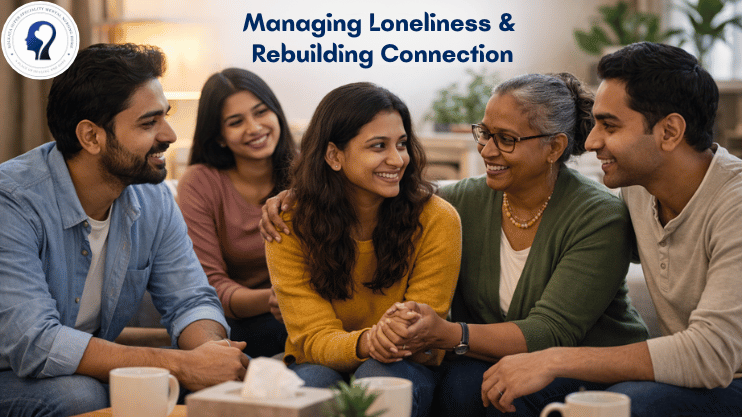
Loneliness can happen even when life looks “normal” on paper. You might have family around you and still feel emotionally alone. You might be a college student with classmates everywhere and still feel disconnected, as if nobody really knows you. You might scroll through messages and feel more distant instead of connected.
Loneliness is not a personality flaw. Humans are social beings by nature, and loneliness is a signal, like hunger or fatigue, telling you something important: you need a meaningful connection. The good news is that loneliness is manageable, and support is available when it starts to feel overwhelming.
This article is educational and not a diagnosis.
Loneliness vs Social Isolation: Why the Difference Matters
Loneliness is the feeling of being disconnected, even if you’re surrounded by people. Social isolation is more objective, meaning you have limited contact with others or fewer social supports.
You can be socially active and still feel lonely if relationships feel shallow or unsafe. You can also be alone and not feel lonely if you feel content and connected to a purpose. Understanding the difference helps because the solution is not always “meet more people.” Sometimes it’s “build safer, deeper connection.”
Why Loneliness Can Feel So Heavy
Loneliness affects both mind and body. It can show up as restlessness, low motivation, irritability, sadness, or a sense of emptiness. It can also affect sleep, appetite, energy, and concentration.
Over time, persistent loneliness can increase stress and make the world feel less safe. When someone feels disconnected for a long period, they may withdraw more, not because they don’t want relationships, but because rejection feels more painful. This creates a cycle: loneliness leads to withdrawal, withdrawal reduces opportunities for connection, and loneliness grows.
Sometimes loneliness is also linked with psychological issues such as social anxiety, grief, trauma, depression, or low self-worth. In those cases, the path forward often includes both social steps and mental health support.
If loneliness and social isolation are affecting daily life, getting help from a best psychiatric hospital in Kolkata can support proper evaluation and the next steps in care.
Healthy Strategies to Manage Loneliness
One of the most effective steps is reaching out, even when it feels awkward. A simple message to an old friend can reopen a door. If that feels too big, start with low-pressure contact, like a short phone call or a quick check-in message.
Group activities help because they create repeated contact, which is how connection becomes real. Classes, hobby groups, volunteering, faith communities, walking groups, book circles, and neighborhood events work well because you see the same people regularly.
Technology can help when used intentionally. Video calls and scheduled phone calls can maintain closeness, especially with long-distance relationships. The key is using technology to deepen relationships, not replace them.
It also helps to build communication skills. Loneliness isn’t always about not having people around. Sometimes it’s about not knowing how to express what you feel, how to start conversations, or how to ask for support. Skills like active listening, asking open questions, and sharing feelings in a clear, calm way can make relationships feel safer and more real.
The Social Media Trap: When Online Makes You Feel Worse
Social media can give a quick sense of contact, but it can also increase loneliness through comparison. Seeing highlights of other people’s lives can make you feel left behind, even when you know the posts are curated.
If you notice you feel worse after scrolling, it may help to reduce screen time, unfollow accounts that trigger comparison, and shift toward real interaction. A small experiment can be revealing: reduce social media time for a week and use that time for one real connection, even a short call or in-person visit.
Self-Care That Supports Connection
Self-care matters because loneliness can drain energy and confidence, which makes reaching out harder. Movement, sleep routines, and nutritious meals can stabilize mood and reduce emotional volatility.
Hobbies also matter. They give you identity beyond relationships and create natural opportunities to meet people with shared interests. Journaling can help you process feelings and identify patterns, such as when loneliness hits hardest and what kind of connection you actually need.
If you have ongoing health questions such as chronic fatigue, sleep disturbance, appetite changes, thyroid issues, or long-term pain, it’s worth discussing them with a healthcare professional. Physical symptoms can intensify loneliness and low mood, and treating medical contributors can make social steps feel more possible.
When Loneliness Might Be a Sign of Something More
Sometimes loneliness is the main issue. Other times, it’s part of depression, anxiety, trauma, grief, or burnout. If loneliness comes with persistent hopelessness, loss of interest in activities, or a sense that life has no meaning, it’s important to take it seriously.
Loneliness can also become entangled with unhealthy coping habits. Some people increase alcohol use or other substances to numb the pain, which often worsens mood and isolation over time.
When loneliness is linked with low mood, anxiety, or emotional withdrawal, professional psychiatric counseling can help improve coping and social connection.
Signs You May Need Professional Help
Professional help is important when loneliness feels persistent and overwhelming, or when your ability to function is slipping. If you feel constantly empty, hopeless, or anxious, if you are withdrawing from family and friends, or if you have physical symptoms like headaches, unexplained pain, or ongoing exhaustion, it may be time to seek support.
It also matters if daily life feels unmanageable and you cannot manage emotions on your own, or if you are relying on alcohol or substances to cope.
If you have thoughts of self-harm, suicide, or not wanting to wake up, treat that as urgent and seek immediate help.
How Counseling Can Help with Loneliness
Counseling sessions can help you understand what’s keeping loneliness stuck. Therapy can support you in identifying unhelpful beliefs like “nobody cares,” “I don’t belong,” or “I’ll be rejected,” and learning healthier ways to think and act.
Counseling sessions can also help build communication skills, social confidence, and boundaries. For many people, having one consistent, safe relationship in therapy makes it easier to reconnect with friends, family members, or new communities.
If you’re not sure where to start, a general practitioner or mental health professional can guide you, especially if there are overlapping psychological issues such as anxiety or depression.
A Gentle Plan for the Next Seven Days
If you want a simple starting point, choose one connection action and repeat it. Reach out to one person. Attend one group activity. Schedule one call. Even small steps count, because loneliness improves through repetition, not through one big moment.
The goal is not instant closeness. The goal is regular contact that gradually becomes a connection.
Psychiatric Counselling from a Kolkata Mental Hospital
If loneliness is persistent, worsening, or linked with depression, sleep or appetite changes, substance use, or thoughts of self-harm, contact a qualified healthcare provider or mental health professional. If there is immediate danger, seek emergency help right away. Visit our neuropsychiatric clinic in Kolkata if you require expert counselling from professional psychiatrists.

Dr. Sagnik Mukherjee, a distinguished Consultant Neuro-Psychiatrist with credentials including an MBBS and MD, leads the expert team at Kolkata Super Speciality Mental Nursing Home. As a renowned consultant psychiatrist and de-addiction specialist in Kolkata, Dr. Mukherjee is highly regarded for his extensive experience and expertise in the field of mental health. He earned his MBBS from Calcutta National Medical College and his MD from SVS Medical College, demonstrating his commitment to excellence in the medical field. Driven by a profound passion for mental health, his areas of specialization encompass child and adolescent psychiatry, addiction treatment, schizophrenia, depression, and various anxiety disorders. At our state-of-the-art facility, your well-being is our top priority, and we provide personalized care within a supportive environment. To schedule an appointment with Dr. Sagnik Mukherjee and experience the highest standard of mental health care, please contact us at 9062999922 or visit our mental hospital. Your mental health matters to us, and we are here to support you on your journey to well-being.