
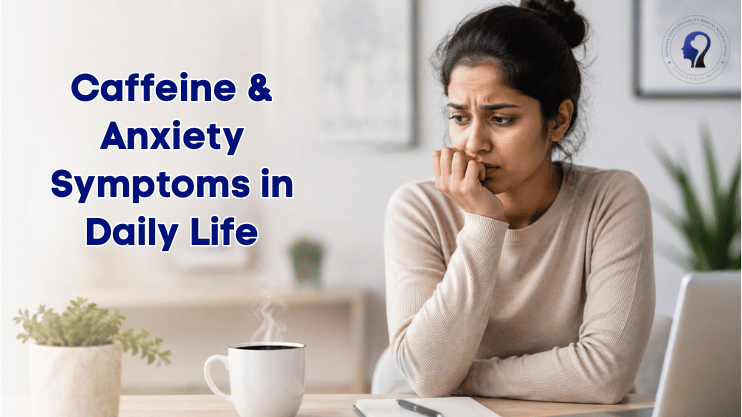
Caffeine feels harmless because it is everywhere. Tea, coffee, energy drinks, cola, chocolate, pre-workout powders, and even some medications can contain it. For many people, a morning cup improves alertness and mood. But for someone prone to anxiety, caffeine can feel less like “energy” and more like the body has been pushed into panic mode.
Caffeine does not directly cause anxiety in every person. That would be too simplistic. But it can mimic anxiety, worsen existing anxiety, and trigger panic-like symptoms in sensitive individuals. This is often described as caffeine-induced anxiety, especially when symptoms appear after consuming caffeinated beverages.
If you already struggle with anxiety, panic attacks, poor sleep, or constant physical tension, your caffeine habit deserves a closer look because it can affect both your body and mental health.
What Caffeine Does to the Brain
Caffeine is a central nervous system stimulant. Its main action is blocking adenosine receptors. Adenosine is a brain chemical that helps promote tiredness, relaxation, and sleep pressure. When caffeine blocks adenosine receptors, you feel more awake.
That can be useful in moderation. The problem is that the same alertness can turn into overstimulation. Your mind may feel restless. Your thoughts may speed up. Your body may start showing signs that look very similar to anxiety.
This is why caffeine can be confusing. You may think, “I’m anxious,” when part of what you are feeling is actually caffeine-driven stimulation.
Why Caffeine Can Feel Like Anxiety
Anxiety and caffeine can activate similar body systems. Caffeine may increase heart rate, make your hands feel shaky, tighten your stomach, increase sweating, and make you feel keyed up. These are also common anxiety symptoms.
For someone with panic disorder or health anxiety, this can become a loop. Caffeine raises the heart rate. The person notices the heart rate. The brain interprets it as danger. That fear triggers more adrenaline, and the body moves closer to a panic attack.
In simple terms, caffeine can trick the brain into thinking something is wrong, even when the trigger was just a strong cup of coffee.
Caffeine and the Fight-or-Flight Response
When your body senses threat, it activates the fight-or-flight response. This involves the sympathetic nervous system and stress hormones like adrenaline. Caffeine can push the body in a similar direction by increasing alertness and physical arousal.
This does not mean one cup of tea will cause panic. It means that in sensitive people, or at higher doses, caffeine can add fuel to an already active stress system.
If you are sleep-deprived, under emotional stress, skipping meals, or already anxious, caffeine may hit harder than usual.
How Much Caffeine Is Too Much?
For many healthy adults, up to around 400 mg of caffeine per day is often considered a general upper limit. But this is not a personal guarantee. Some people feel anxious after 50 to 100 mg. Others tolerate more without obvious symptoms.
This is why the question should not only be “How much is safe generally?” The better question is “How much can my nervous system tolerate without anxiety, poor sleep, or physical discomfort?”
The caffeine content in coffee, tea, energy drinks, and supplements varies widely. A large café coffee can contain much more caffeine than people realize. Energy drinks and pre-workout supplements can push intake up quickly, especially when combined with other caffeinated beverages.
Why Some People Are More Sensitive to Caffeine
Caffeine sensitivity is not imaginary. Your body’s response depends partly on how quickly your liver processes caffeine and how sensitive your brain is to its effects.
Some people metabolize caffeine slowly, which means it stays active in their body for longer. They may feel jittery for hours, have trouble sleeping, or feel anxious even after a moderate amount.
People with existing anxiety disorders, panic attacks, insomnia, heart rhythm concerns, certain medical conditions, or high stress levels may also be more vulnerable to caffeine-induced anxiety.
Caffeine, Sleep, and Anxiety
Sleep is one of the biggest reasons caffeine worsens anxiety. Even if caffeine does not make you feel anxious immediately, it may reduce sleep quality later. Poor sleep then increases emotional reactivity the next day.
This creates a bad cycle. You sleep poorly, wake up tired, use caffeine to function, become overstimulated, sleep poorly again, and then need more caffeine the next day.
If anxiety is worse in the evening or morning, caffeine timing may be part of the problem. For many people, avoiding caffeine after lunch is a practical first step. For sensitive people, even morning caffeine may need reduction.
Can Caffeine Trigger Panic Attacks?
Yes, caffeine can trigger panic-like symptoms or panic attacks in some people, especially those with panic disorder or high anxiety sensitivity. The physical sensations matter: fast heartbeat, breathlessness, trembling, dizziness, and chest tightness can all become panic triggers.
That does not mean everyone with anxiety must quit caffeine completely. But if panic attacks are frequent, reducing caffeine is one of the simplest variables to test.
A practical approach is to track caffeine intake and symptoms for one to two weeks. If panic symptoms cluster after caffeine, the pattern is telling you something.
Hidden Sources of Caffeine
Many people underestimate their actual intake. Coffee is obvious, but caffeine can also come from tea, green tea, energy drinks, cola, chocolate, weight-loss products, pre-workout drinks, and some headache or cold medications.
This matters because a person may say, “I only drink two coffees,” but still consume caffeine from multiple other sources. Anxiety symptoms often make more sense once the full intake is visible.
Checking caffeine content on labels is useful, especially if you use energy drinks, gym supplements, or over-the-counter medications.
How to Manage Caffeine-Related Anxiety
If you feel anxious after caffeine, do not panic. The effects usually reduce as your body metabolizes it. Drinking water can help if you are dehydrated, although it will not instantly “flush out” caffeine. Gentle movement, like walking, can help burn off restless energy. Slow breathing can reduce the secondary panic response that builds when you become afraid of the sensations.
Do not add more caffeine to “push through” the crash. That usually extends the cycle.
If caffeine regularly worsens anxiety, reduce gradually rather than stopping suddenly. Abrupt withdrawal can cause withdrawal symptoms such as headaches, fatigue, irritability, low mood, sleepiness, and brain fog. Those withdrawal symptoms are temporary for most people, but they can feel unpleasant and may make anxiety feel worse for a few days.
Should You Switch to Decaffeinated Coffee?
For some people, decaffeinated coffee is a useful compromise. It allows the comfort and routine of coffee without the same stimulant load. That said, decaffeinated coffee is not always completely caffeine-free, so very sensitive people should still pay attention to how they feel.
Some people do well by switching from strong coffee to tea, reducing serving size, or limiting caffeine to the morning. Others feel best when they avoid caffeinated beverages completely.
The right choice depends on your symptoms, sleep, panic sensitivity, and overall mental health.
Should You Quit Caffeine Completely?
Not always. Some people do fine with a smaller amount, weaker coffee, tea instead of coffee, decaffeinated coffee, or caffeine only before late morning. Others do better with no caffeine.
The decision depends on your symptoms. If caffeine worsens panic, insomnia, palpitations, irritability, or anxious overthinking, reducing it is not a wellness trend. It is basic symptom management.
If your anxiety improves after reducing caffeine, that does not mean your anxiety was fake. It means caffeine was one factor making your nervous system more reactive.
When to Seek Professional Help
If anxiety is frequent, intense, or affecting sleep, work, relationships, appetite, or daily functioning, caffeine reduction alone may not be enough. Anxiety disorders are treatable, but they need proper assessment and care.
You should seek urgent medical help if anxiety-like symptoms include severe chest pain, fainting, severe breathlessness, confusion, or thoughts of self-harm. Do not assume every physical symptom is “just anxiety” or “just caffeine.”
A Practical Takeaway
Caffeine is not the enemy for everyone. But if you are prone to anxiety, it can act like a volume knob for your nervous system. It can make the heart race, thoughts speed up, sleep worsen, and panic symptoms feel more likely.
The most sensible move is observation. Track your intake, check caffeine content, notice your symptoms, reduce gradually if needed, and get professional help if anxiety continues to interfere with your life.
Medical Disclaimer
This blog is for general education and does not diagnose or replace medical advice. Anxiety, panic symptoms, palpitations, sleep problems, and chest discomfort can have many causes. If symptoms persist, worsen, or feel unsafe, consult a qualified healthcare professional. If there is immediate danger, severe chest pain, fainting, or thoughts of self-harm, seek urgent medical help.

Dr. Sagnik Mukherjee, a distinguished Consultant Neuro-Psychiatrist with credentials including an MBBS and MD, leads the expert team at Kolkata Super Speciality Mental Nursing Home. As a renowned consultant psychiatrist and de-addiction specialist in Kolkata, Dr. Mukherjee is highly regarded for his extensive experience and expertise in the field of mental health. He earned his MBBS from Calcutta National Medical College and his MD from SVS Medical College, demonstrating his commitment to excellence in the medical field. Driven by a profound passion for mental health, his areas of specialization encompass child and adolescent psychiatry, addiction treatment, schizophrenia, depression, and various anxiety disorders. At our state-of-the-art facility, your well-being is our top priority, and we provide personalized care within a supportive environment. To schedule an appointment with Dr. Sagnik Mukherjee and experience the highest standard of mental health care, please contact us at 9062999922 or visit our mental hospital. Your mental health matters to us, and we are here to support you on your journey to well-being.