
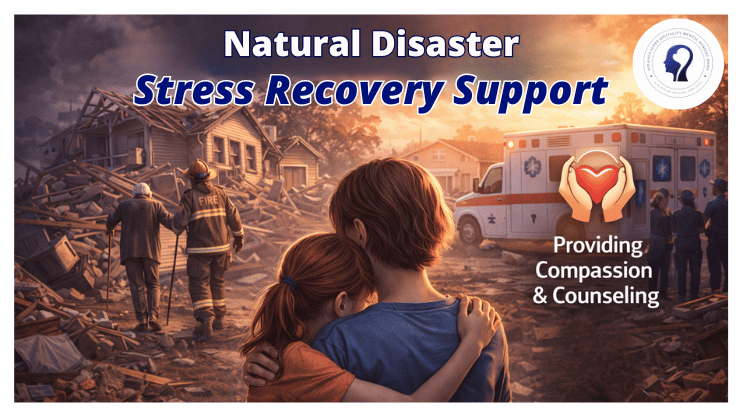
Natural disaster events strike with devastating force, upending lives in moments. Beyond property damage and physical destruction, disaster events leave psychological scars that can persist long after disaster recovery begins. Understanding normal stress responses to traumatic events and knowing when to seek mental health services guides survivors toward healthy recovery. Your mental health matters, and healing is possible with proper social support.
Normal Reactions to Disaster Events
Experiencing distress after a natural disaster is completely normal. Your mind and body are processing traumatic events that threatened your safety, your home, or people you care about. Common reactions include difficulty sleeping, recurring thoughts about the disaster events, heightened anxiety, irritability, and feeling disconnected from others. These mental health responses are natural following such traumatic events.
Physical symptoms often accompany emotional distress after disaster events. Headaches, stomach problems, fatigue, and tension are your body’s responses to disaster-related stress. These symptoms typically decrease as immediate crisis resolves and disaster recovery progresses, though mental health support can help accelerate healing.
Children may express distress differently than adults after traumatic events. Regression to younger behaviors, clinginess, nightmares, or acting out can indicate children are struggling. School performance may suffer temporarily following disaster events. With social support and stability, most children’s mental health recovers well.
Understanding Disaster-Related Mental Health Conditions
While most people recover naturally from disaster-related stress, some develop mental health conditions requiring professional support. Posttraumatic Stress Disorder can develop following traumatic events like natural disasters, particularly when property damage is severe or lives are threatened. Studies following Hurricane Katrina showed elevated rates of Posttraumatic Stress Disorder among survivors.
Research on disaster events including Hurricane Katrina demonstrates that mental health impacts can persist for years without proper intervention. Posttraumatic Stress Disorder symptoms include flashbacks, nightmares, severe anxiety, and avoidance of disaster reminders. Mental health conditions like depression and anxiety disorders also commonly follow disaster events.
Risk factors for developing Posttraumatic Stress Disorder after natural disaster include direct exposure to life-threatening situations, losing loved ones, and experiencing significant property damage. Previous trauma or existing mental health conditions increase vulnerability. Strong social support serves as a protective factor for mental health.
Healthy Coping Strategies for Disaster Recovery
Active coping helps you move through disaster-related stress rather than becoming stuck. Maintaining daily routines as much as possible during disaster recovery provides structure and normalcy. Even simple patterns like regular meals, consistent sleep schedules, and daily walks help stabilize your mental health following traumatic events.
Mindfulness exercises can help manage anxiety and stress after disaster events. Simple breathing techniques and mindfulness exercises ground you in the present moment rather than dwelling on traumatic events. These practices support mental health without requiring special equipment or training during disaster recovery.
Limit media exposure about the disaster events. While staying informed matters, constant news coverage keeps your nervous system activated. Set specific times to check updates rather than maintaining continuous exposure to distressing images. Protecting your mental health means being intentional about information consumption.
Building social support is crucial for disaster recovery. Connect with others who understand your experience through support groups or support networks. Talking with fellow survivors validates your feelings and reduces isolation. Social support from family, friends, and community strengthens mental health resilience after traumatic events.
Creating a Disaster Plan for Future Preparedness
Having a family disaster plan reduces anxiety about future events. A disaster plan includes evacuation routes, meeting points, emergency contacts, and supplies. Knowing you have a disaster plan in place provides sense of control that supports mental health. Involve all family members in creating your disaster plan.
Disaster preparedness also includes mental health considerations. Identify mental health services and crisis counseling resources in your area before disaster events occur. Having a disaster plan for emotional support is as important as physical preparation for disaster recovery.
When Professional Mental Health Help Is Needed
Most people recover from disaster-related stress naturally with adequate social support. However, some individuals develop more persistent mental health conditions requiring professional intervention. If symptoms remain intense more than one month after the disaster events, seeking mental health services is appropriate.
Psychological first aid provides immediate mental health support following disaster events. Trained professionals deliver psychological first aid to help stabilize emotional responses. Crisis counseling offers short-term mental health support specifically designed for disaster recovery. If crisis counseling reveals need for longer-term care, referrals to mental health services are provided.
Warning signs indicating need for mental health professional evaluation include inability to function at work, school, or relationships after disaster events. Persistent nightmares, flashbacks, or extreme avoidance point toward Posttraumatic Stress Disorder. Thoughts of self-harm require immediate mental health intervention. Increased substance use to cope suggests your mental health needs professional support.
If stress after a traumatic event continues to interfere with daily functioning, a psychiatric hospital can help assess symptoms and guide further care.
Treatment Approaches for Disaster-Related Mental Health Conditions
Evidence-based treatments effectively address Posttraumatic Stress Disorder and other mental health conditions following disaster events. Trauma-focused therapy helps process traumatic events and develop healthy coping strategies. This structured approach supports disaster recovery while building resilience for future challenges.
Group therapy brings together disaster survivors for mutual social support and shared learning. Hearing others’ experiences provides perspective and hope for mental health recovery. Support networks formed during group therapy often continue providing social support long after formal disaster recovery services end.
When stress symptoms remain intense or begin affecting daily functioning, professional psychiatric care in Kolkata may be necessary.
Long-Term Mental Health and Disaster Recovery
Recovery from disaster-related mental health impacts is a process, not an event. Progress may feel slow or uneven during disaster recovery. Anniversary reactions often bring temporary increases in symptoms as dates associated with disaster events approach. This is normal for mental health following traumatic events.
Building social support networks aids long-term disaster recovery. Strong social support protects mental health and provides resources during difficult moments. Community connections formed during disaster recovery often become lasting sources of social support.
KSSM Nursing Home provides comprehensive mental health rehabilitation services for those struggling with disaster-related stress, anxiety, and Posttraumatic Stress Disorder. Our experienced team of doctors offer compassionate mental health treatment in a supportive environment. We understand the unique challenges disaster events create for mental health.
You do not have to navigate disaster recovery alone. Call KSSM at 90629 99922 to speak with our mental health professionals. Whether you need crisis counseling, treatment for Posttraumatic Stress Disorder, or ongoing mental health support, we are here to help. Your mental health recovery is possible with proper social support and professional care.
If stress or anxiety after a natural disaster continues to affect daily life, you can visit our neuropsychiatric clinic in Kolkata for a direct clinical assessment.

Dr. Sagnik Mukherjee, a distinguished Consultant Neuro-Psychiatrist with credentials including an MBBS and MD, leads the expert team at Kolkata Super Speciality Mental Nursing Home. As a renowned consultant psychiatrist and de-addiction specialist in Kolkata, Dr. Mukherjee is highly regarded for his extensive experience and expertise in the field of mental health. He earned his MBBS from Calcutta National Medical College and his MD from SVS Medical College, demonstrating his commitment to excellence in the medical field. Driven by a profound passion for mental health, his areas of specialization encompass child and adolescent psychiatry, addiction treatment, schizophrenia, depression, and various anxiety disorders. At our state-of-the-art facility, your well-being is our top priority, and we provide personalized care within a supportive environment. To schedule an appointment with Dr. Sagnik Mukherjee and experience the highest standard of mental health care, please contact us at 9062999922 or visit our mental hospital. Your mental health matters to us, and we are here to support you on your journey to well-being.